


The Sound of Silence
The Sound of Silence: The Silent Cry of a Disconnected Society
Released in 1965, The Sound of Silence by Simon & Garfunkel has become an iconic song that criticizes modern society and the loss of true connection. Paradoxically, silence is used to express the lack of real communication in a world saturated with noise.
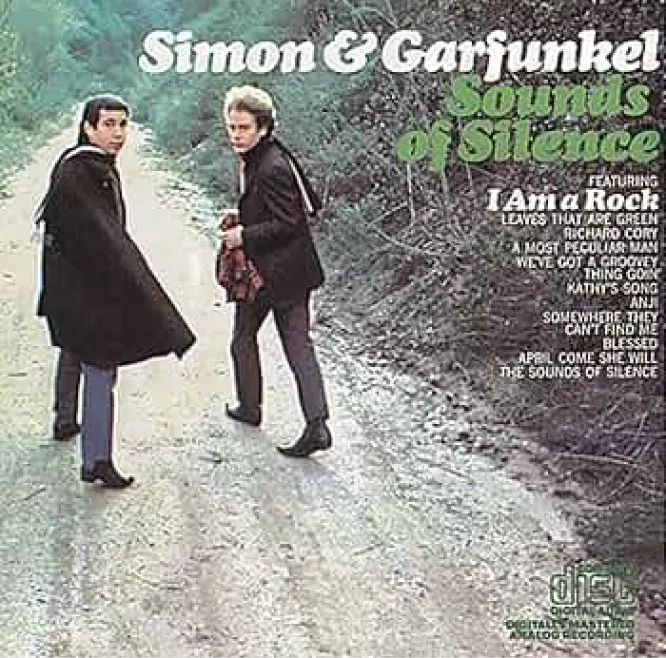
Image of the cover of the CD “The Sound of Silence” by Simon & Garfunkel
Stream the sound here


Or listen and download it below

Silence as an Expression of Isolation
In a world where speech and information are omnipresent, silence becomes a cry of solitude. The Sound of Silence marked the 1960s with its depth and social critique. The American duo Simon & Garfunkel created a work that denounces the lack of real communication in a transforming society. Paradoxically, this song uses the theme of silence to highlight emotional isolation and the inability of individuals to connect authentically.
A Critique of Modern Society
Written by Paul Simon during a period of profound cultural and political upheaval, The Sound of Silence criticizes the excesses of modernity. At a time when technologies are emerging and information is circulating faster and faster, Simon & Garfunkel denounce a society that talks without really communicating. Through phrases like "People talking without speaking, people hearing without listening," the song illustrates the paradox of modern society: the more we communicate, the more we distance ourselves from each other.
Key point: The silence evoked by Simon & Garfunkel symbolizes the isolation and indifference that grow despite the abundance of words.
Silence, a Speech in Itself
The use of silence in Simon & Garfunkel's song is fascinating: silence here becomes a form of speech. It symbolizes the difficulty of individuals to express their emotions in a world where constant noise (media, advertising, politics) takes precedence over authentic communication. In The Sound of Silence, this silence is not a void, but a space filled with fear, solitude, and lack of listening. By singing these words, Simon & Garfunkel give a voice to a generation that feels lost in a flood of information and superficial words.
In short: Silence becomes a voice for those who, drowned in noise, seek to be truly heard.
A Director Committed to Truth

Image of young people wearing headphones in a public space
Nearly 60 years after its release, The Sound of Silence remains incredibly relevant. In our current world saturated by social networks, news channels, and communication technologies, silence symbolizes a form of social dissonance. We are constantly connected, but often isolated in our own bubbles. Simon & Garfunkel's song reminds us that true communication is not only through words, but through listening and understanding others.
"People talking without speaking, people hearing without listening." – Simon & Garfunkel
By Eva LACROIX
Published Todey at 09:30 AM